From Self-Doubt to Self-Assurance: Your Guide to Building Lasting Confidence
Self-confidence isn't an innate trait reserved for a lucky few; it's a skill that can be cultivated. It’s the quiet, internal belief in your ability to meet life's challenges. This article provides practical, psychology-backed strategies to dismantle self-doubt and build a foundation of genuine self-assurance, one step at a time.

What is Self-Confidence, Really?
Before we can build it, we must understand it. Self-confidence is not about arrogance or feeling superior to others. At its core, it is self-trust. It's the deep-seated belief that you are capable, worthy, and can rely on yourself to handle what life throws your way. It's the inner voice that says, "I can figure this out," rather than, "I'm going to fail." This quiet assurance allows you to take calculated risks, embrace challenges, and bounce back from setbacks.
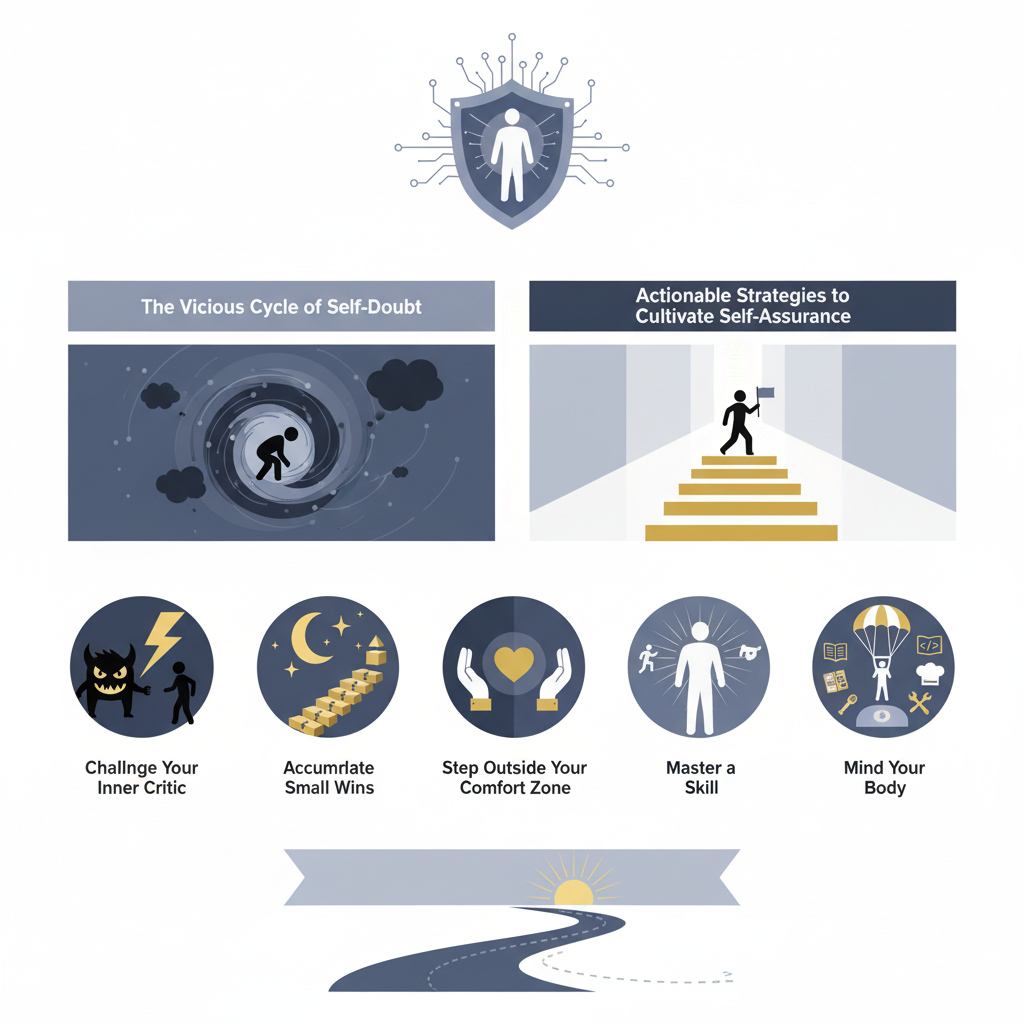
The Vicious Cycle of Self-Doubt
Self-doubt often operates in a destructive loop. It starts with a negative thought ("I'm not good enough for this promotion"), which leads to inaction (not applying for the job), which then reinforces the original negative belief ("See? I knew I couldn't do it"). Breaking this cycle requires conscious effort and a new set of mental tools.
Actionable Strategies to Cultivate Self-Assurance
Building confidence is an active process. It’s like strengthening a muscle; it requires consistent practice. Here are several evidence-based strategies to get you started:
Challenge Your Inner Critic
Negative self-talk is the fuel for self-doubt. The first step is to become aware of it. When you catch yourself thinking negatively, pause and question the thought. Is it 100% true? Is there a more compassionate or realistic way to view the situation? This practice, rooted in Cognitive Behavioral Therapy (CBT), helps you separate from your negative thoughts and reclaim your narrative.
Accumulate Small Wins
Big goals can be intimidating and can fuel feelings of inadequacy. Instead, break them down into small, manageable steps. Each time you complete a small task—whether it's cleaning your desk, going for a 10-minute walk, or sending one important email—you provide your brain with proof of your competence. Celebrate these small wins; they are the building blocks of momentum and self-belief.
Step Outside Your Comfort Zone
Confidence is built through evidence, and evidence is gathered through action. Consistently doing things that scare you, even in small ways, demonstrates your resilience. Volunteer to speak in a meeting, try a new hobby, or travel somewhere alone. Each new experience expands the boundaries of your comfort zone and proves that you are more capable than you thought.
Practice Self-Compassion
Many of us treat our friends with more kindness and understanding than we treat ourselves. Self-compassion involves treating yourself with the same support you'd offer a loved one during a difficult time. Acknowledge that making mistakes is a universal human experience and a necessary part of growth. When you fail, replace self-criticism with gentle encouragement.
Master a Skill
Competence is a powerful driver of confidence. Pick something you're genuinely interested in—be it coding, cooking, playing an instrument, or public speaking—and dedicate time to improving. The process of learning and seeing tangible progress provides undeniable proof of your ability to grow and achieve, which spills over into other areas of your life.
Mind Your Body
Your physical state has a profound impact on your mental state. Prioritize regular exercise, which releases endorphins and reduces stress. Pay attention to your posture; standing tall with your shoulders back can actually make you feel more confident (a concept known as embodied cognition). Finally, ensure you're getting enough quality sleep, as exhaustion exacerbates insecurity and negative thinking.
The Journey, Not the Destination
Building self-confidence is not a one-time fix but a lifelong practice. There will be days when you feel on top of the world and days when doubt creeps back in. The goal is not to eliminate all fear and doubt, but to develop the inner resources to act in spite of them. Be patient with yourself, celebrate your progress, and remember that every step forward, no matter how small, is a victory on the path to genuine self-assurance.